




 0:00 / 0:00

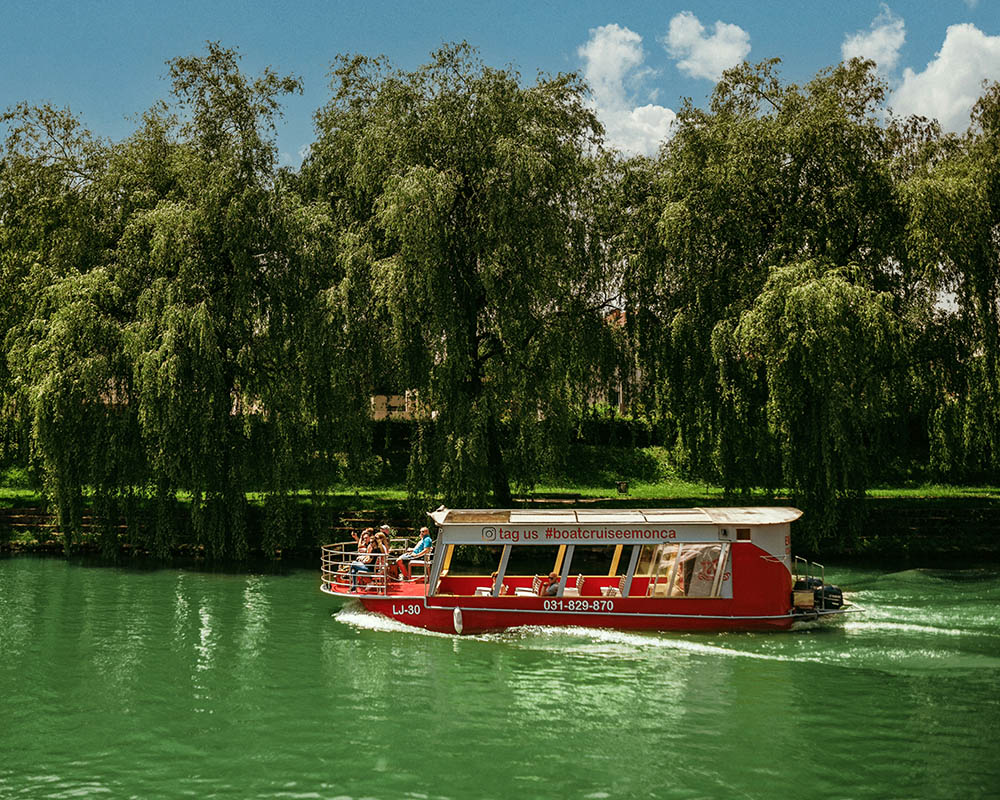
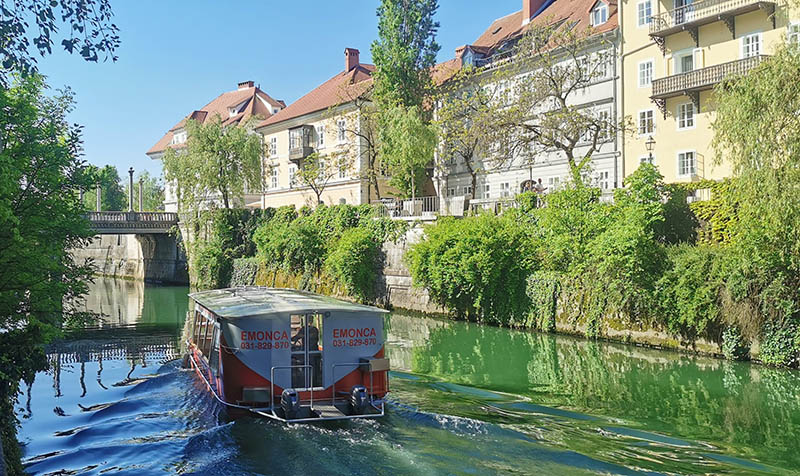
Dear guests, welcome on our boat Emonca. We wish you a pleasant and relaxed trip on the river Ljubljanica.
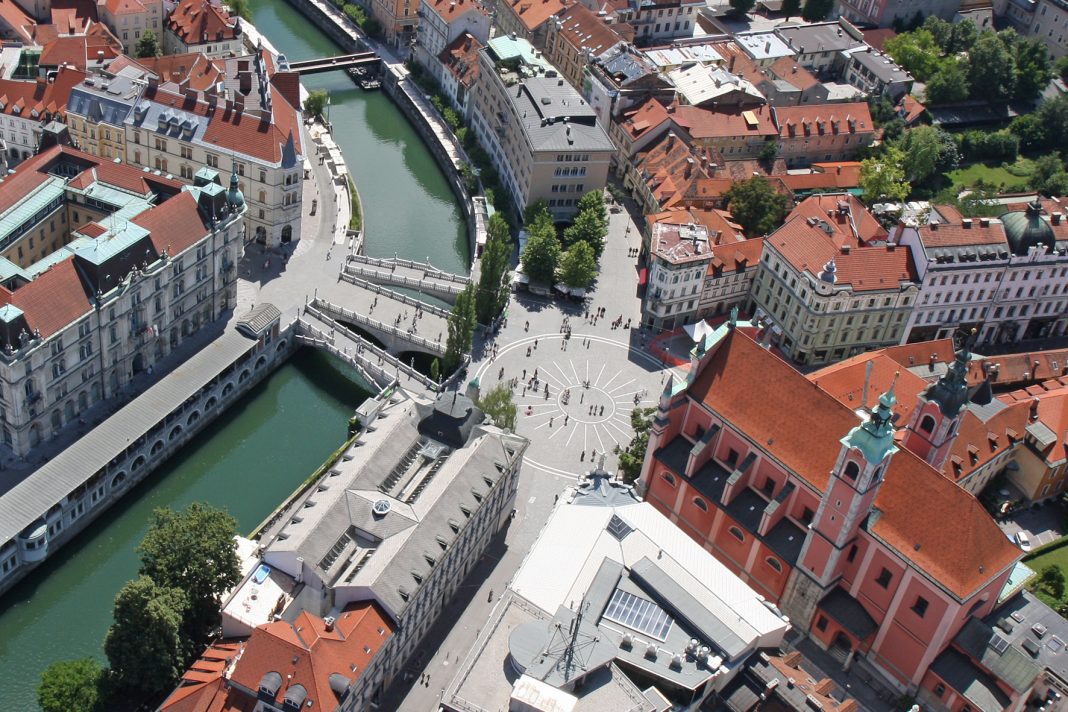
At the place where the famous Three Bridges stands today, only one bridge stood more than four centuries ago. After the great earthquake in Ljubljana, the project of enlarging the bridge was entrusted to Plečnik, who drew up a plan for two new pedestrian bridges, new balustrade railings and connections to the lower terrace above the river.
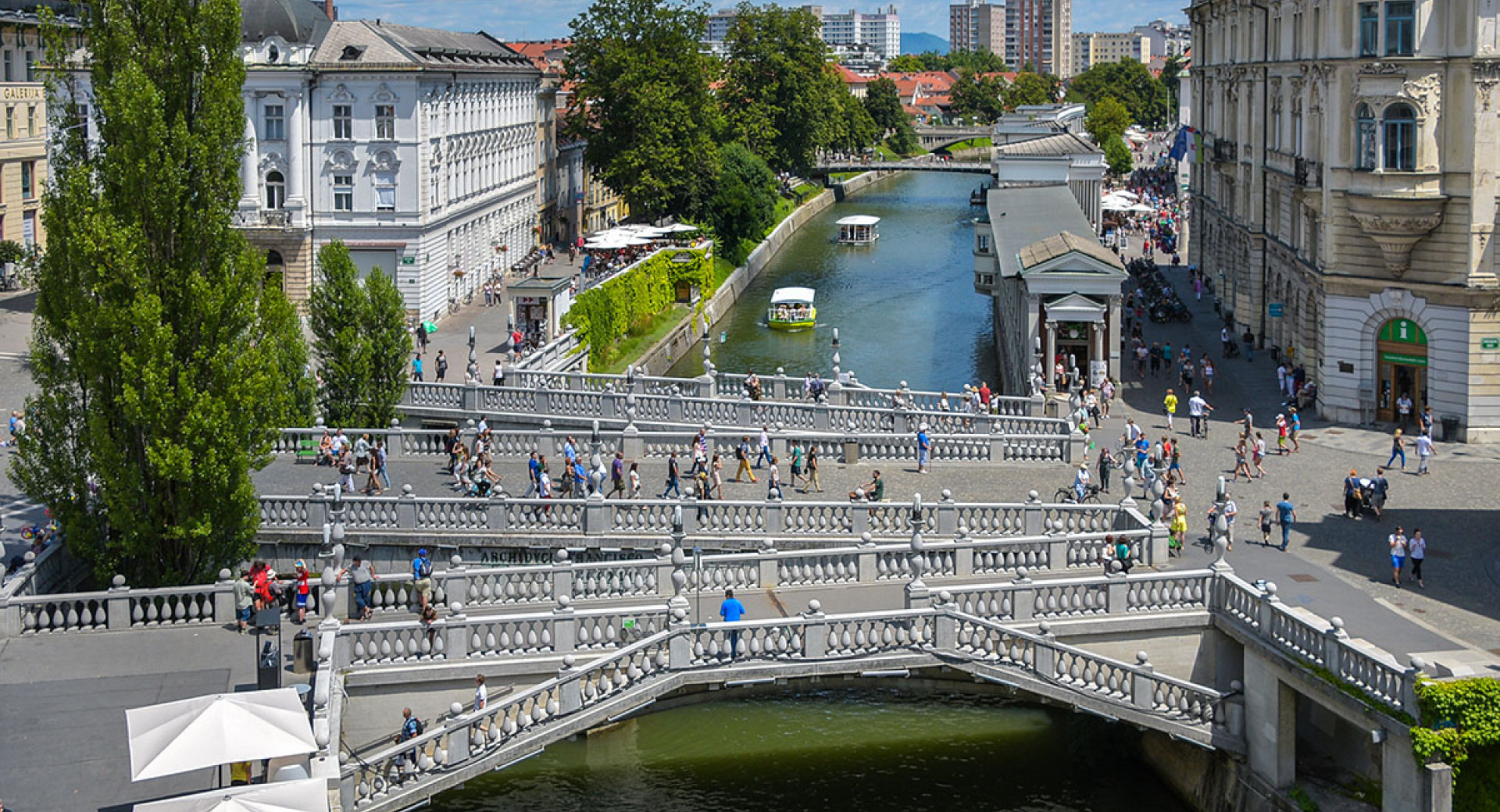
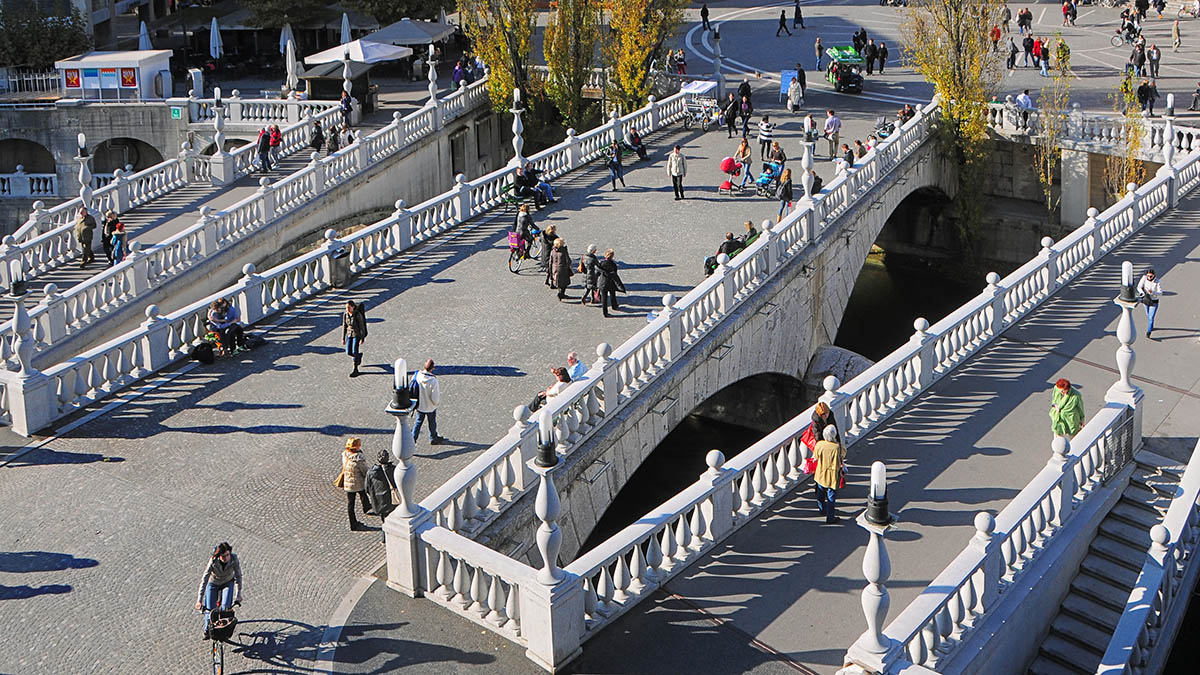
A tram line and later a bus line once ran across the middle bridge. The last tram crossed the bridge in 1958. Since September 2007, the Three Bridges and the city center have been closed for all traffic.
The Three Bridges balustrade is said to have 642 pillars. Each pillar is identical. The cement was mixed with crushed stone, they were poured into moulds and sanded by hand. Plečnik did not do this alone, many of the families from Ljubljana helped him out.
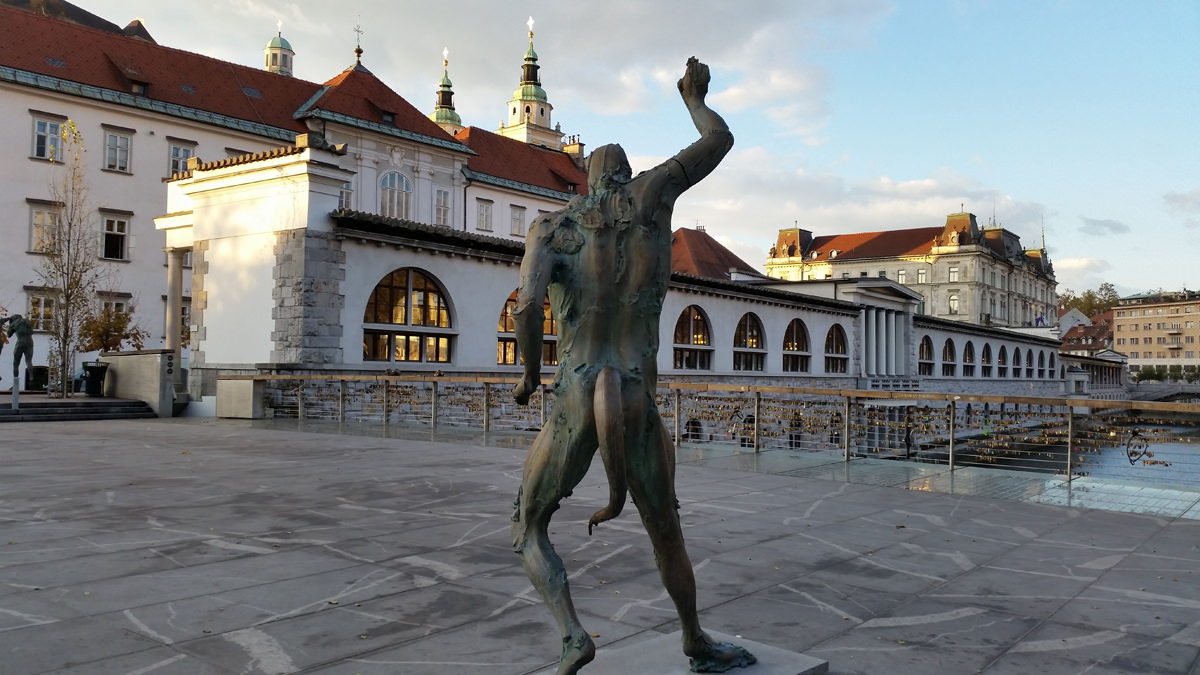
The Butcher's Bridge, built in 2010, stands on the site where Jože Plečnik envisaged a bridge almost a hundred years ago. Its design is partly artistic, as the bridge is marked by the statues of the Slovenian sculptor Jakov Brdar. The Butcher's Bridge is Ljubljana's love bridge. It is a place where countless lovers have symbolically padlocked their love and dropped the keys into the river Ljubljanica.
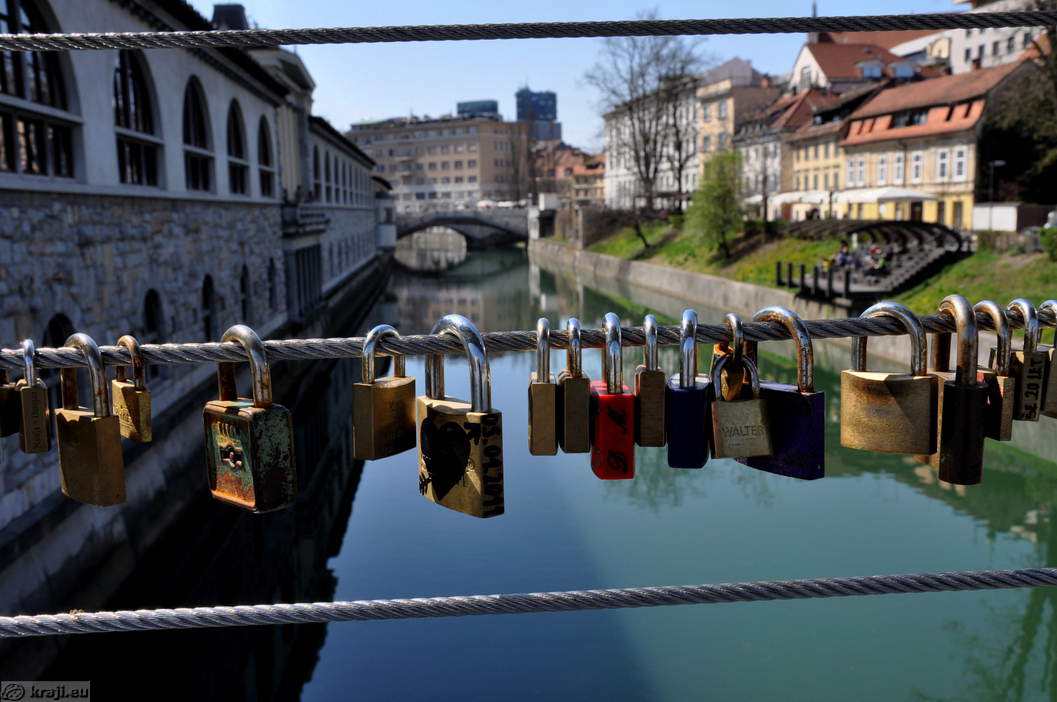

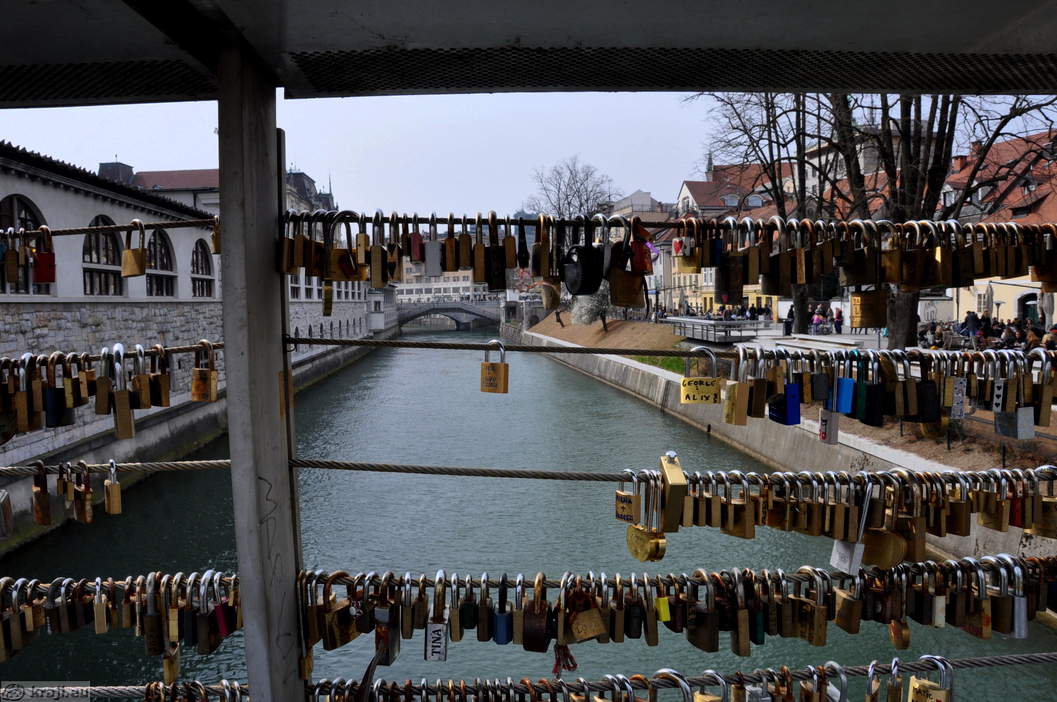
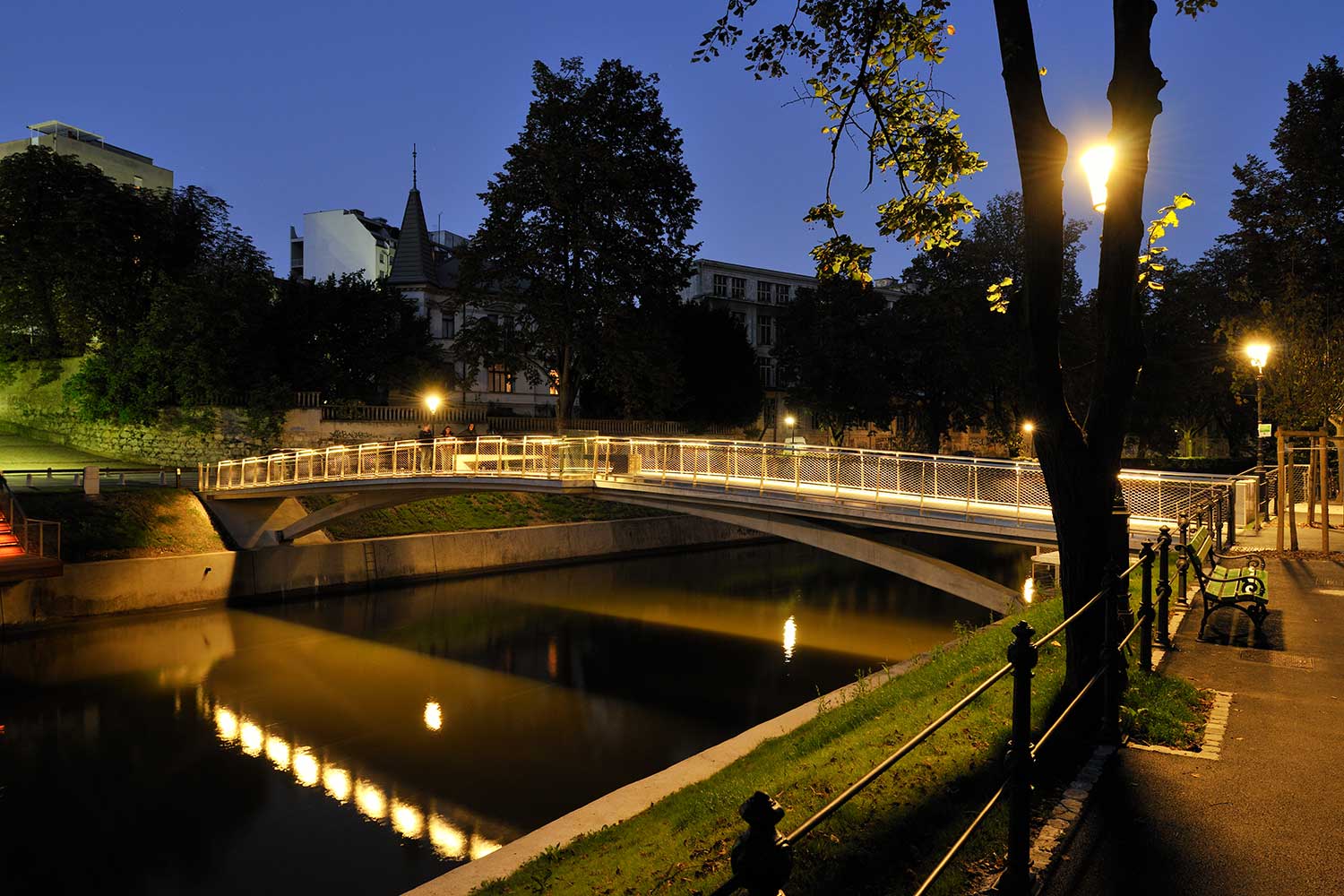
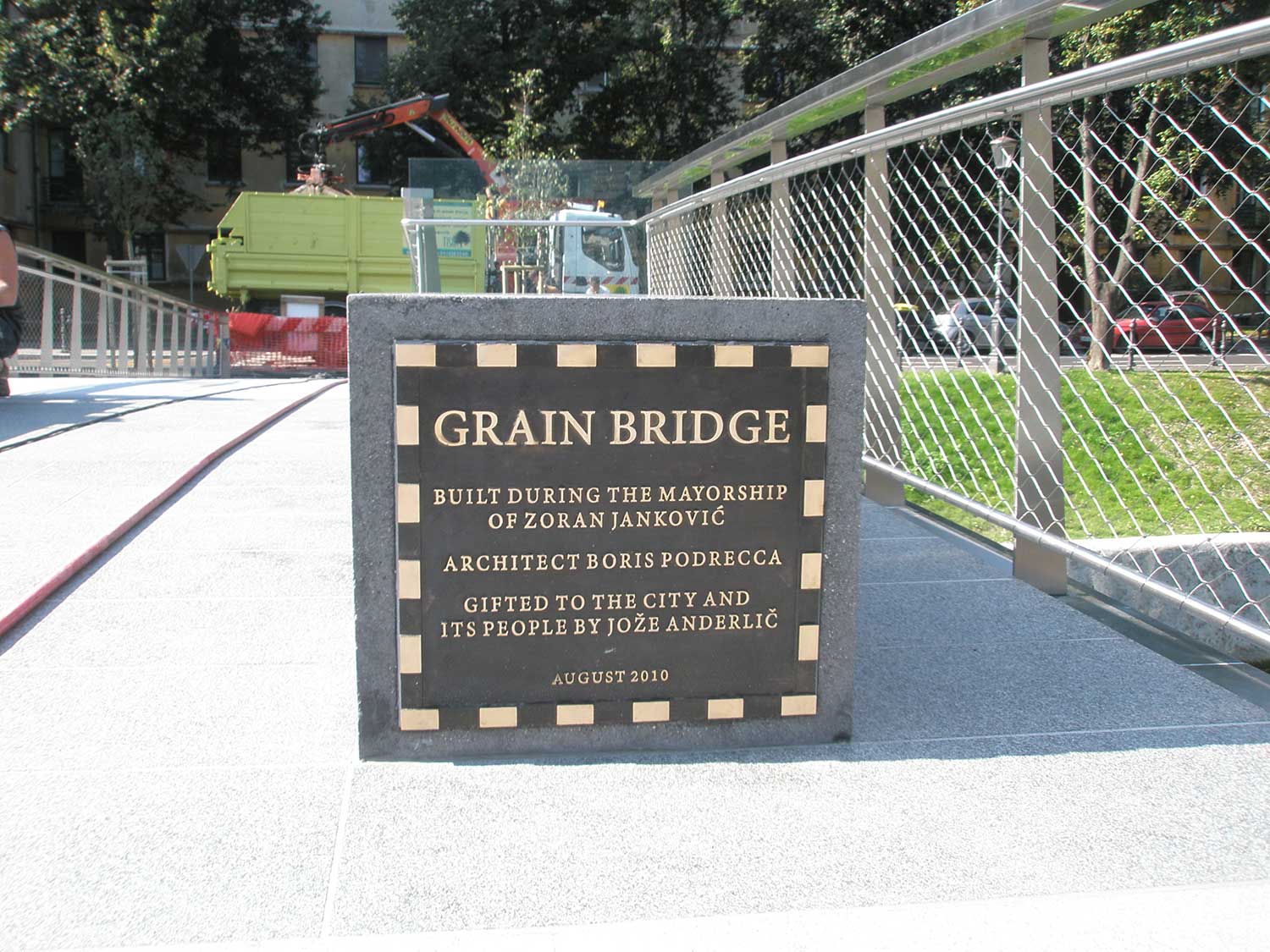
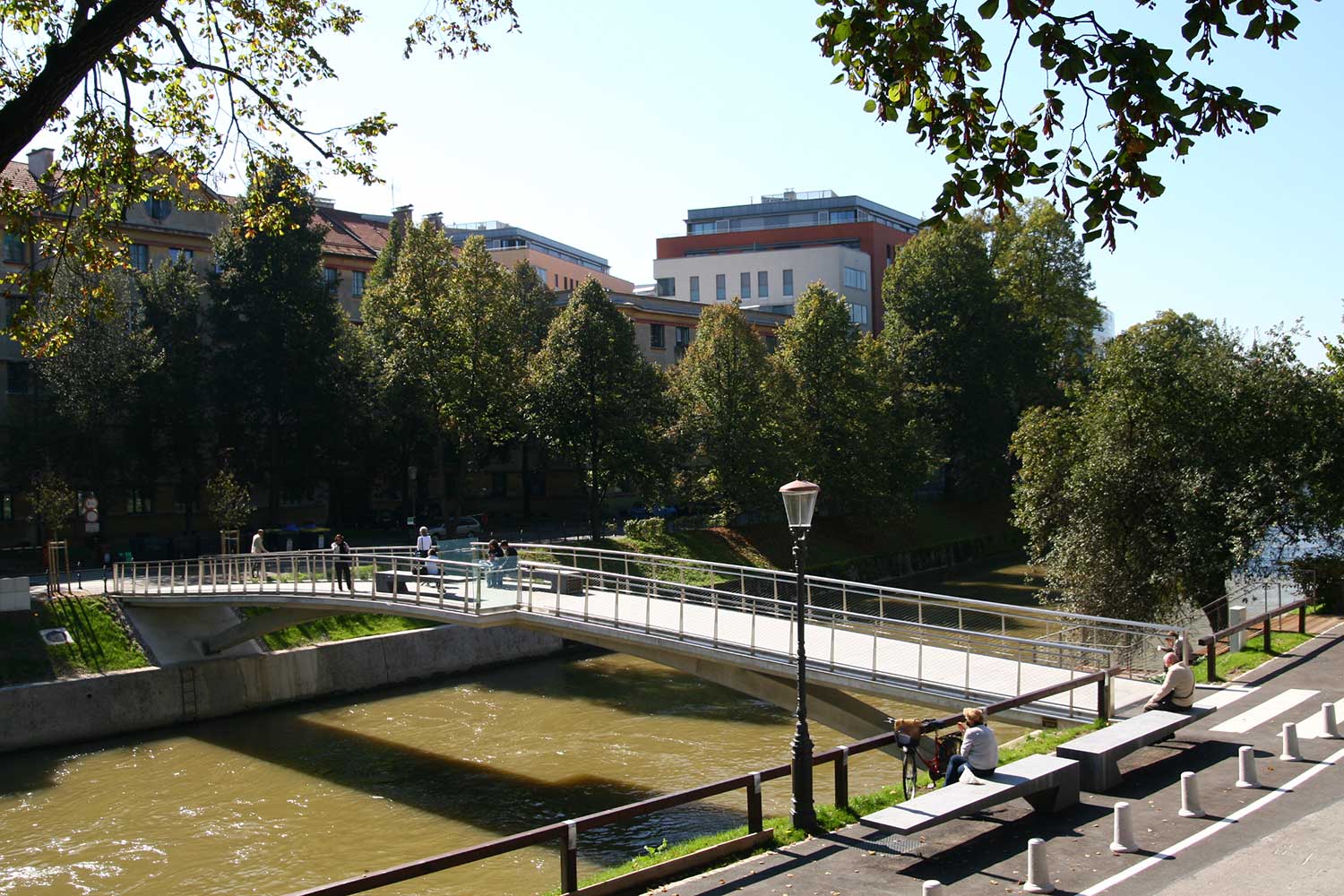
Now we see the Grain Bridge in front of us. Nearby is Ambrožev Square, where livestock and grain were once traded. In memory of this old times, it got its name. The opening of the bridge was in August 2010.
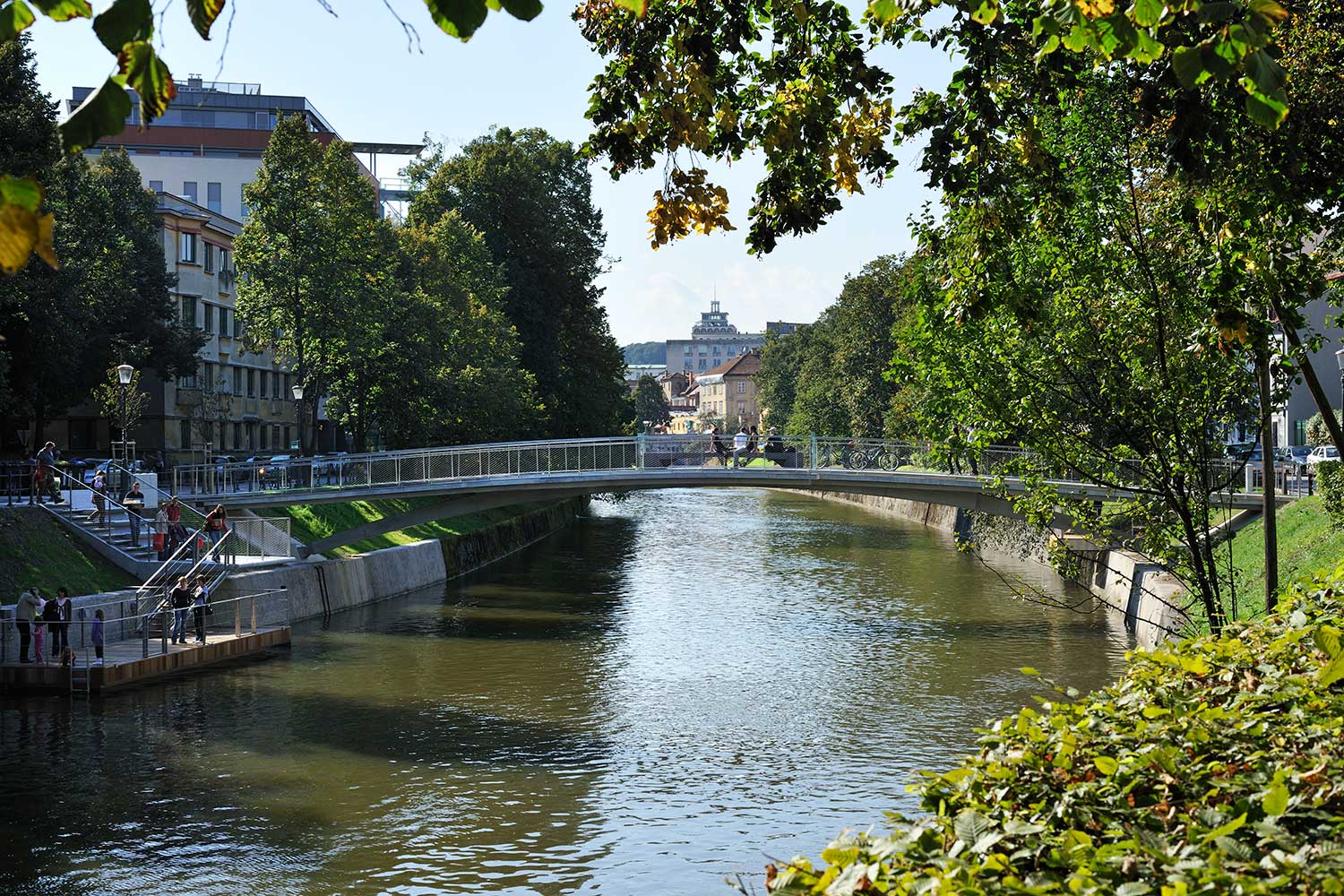
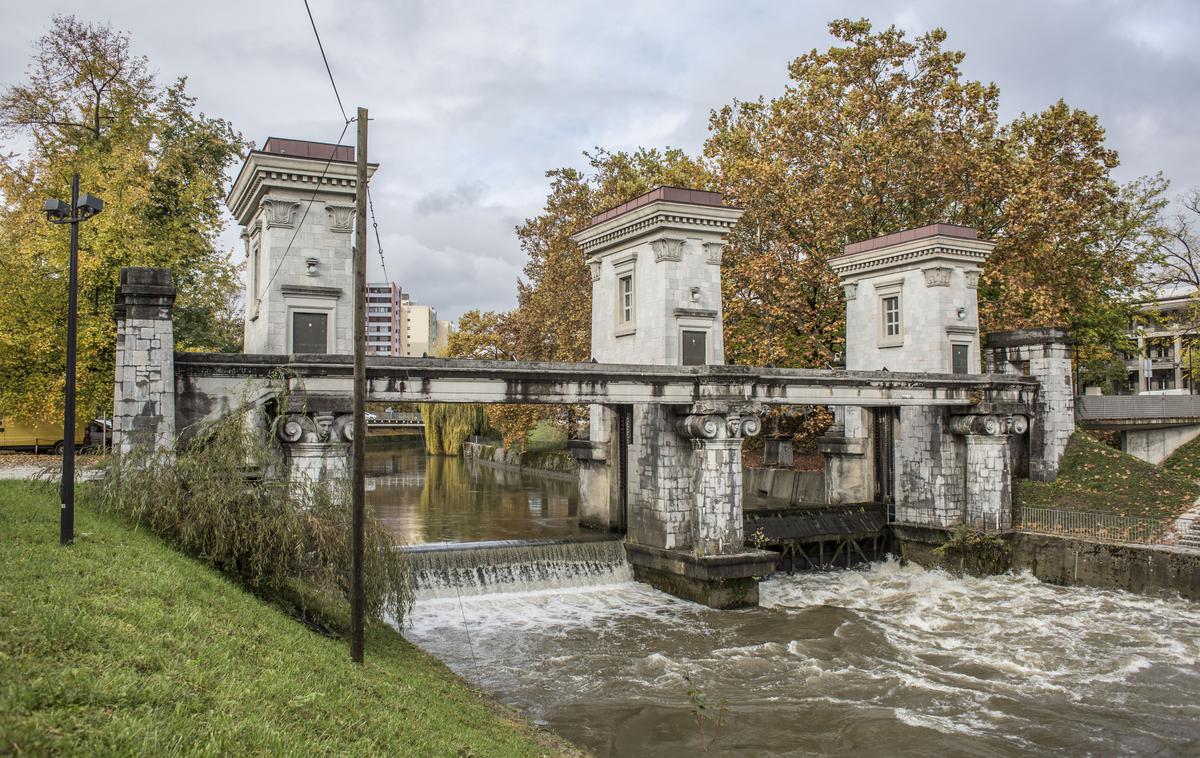
Behind the Šempeterski bridge, we will have a view of Plečnik's monumental water locks UNESCO, which stands at the end of a regulated channel and serves to regulate the water level of the river Ljubljanica in the center of Ljubljana. It was built in 1944 according to the plans of Jože Plečnik, who designed it as a symbolic rounding off of the city center and a farewell to the Ljubljanica. In this way, he marked the place where the river says goodbye to the city, and at the same time, he also designed a connecting element between the promenades towards the city. The design of the lock is full of various symbolic, architectural and cultural references that Plečnik introduced into this recognizable work of his. Today, as part of Plečnik's legacy, it has the status of a cultural monument of national importance, and in July 2021 it was added to the UNESCO World Heritage List.

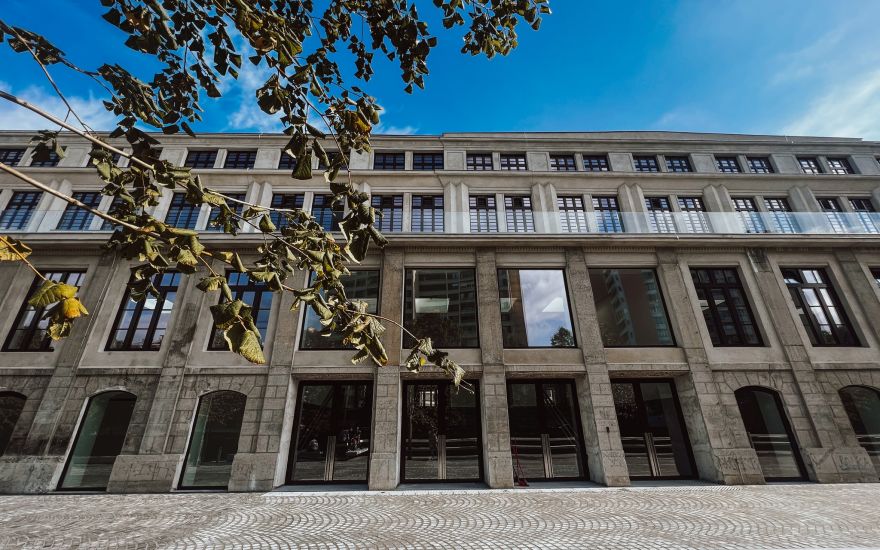
The big building you see on your right is the Rog Creative Center. Inside, you can discover several production labs, workshops, restaurants, a library and a coffee shop. The opening of the new creative center was in October 2023. Previously, this building was called the Rog Factory, a symbol of the iconic Rog bicycle, which is the most important industrial cultural heritage of the 20th century in Ljubljana. With the revival of the former ROG FACTORY into CENTER ROG, a new international creative and social center was established right in the center of Ljubljana.

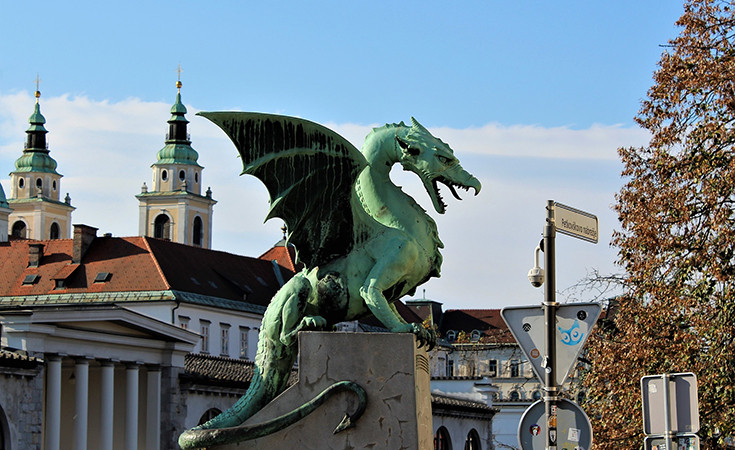
The Dragon Bridge was designed by the architect Jurij Zaninovic and was built at the beginning of the 20th century as one of the most beautiful creations of Vienna secession style. The most important decorations on the bridge are the four dragons, in addition to many smaller ones - there are 20 altogether. At the time, it was one of the first reinforced concrete bridges in Europe and with the first asphalt roadway in Slovenia. When it was opened in 1901, the bridge was dedicated to the fortieth anniversary of the reign of Emperor Franz Joseph I..
That’s why the years 1848-1888 are written on the sides.
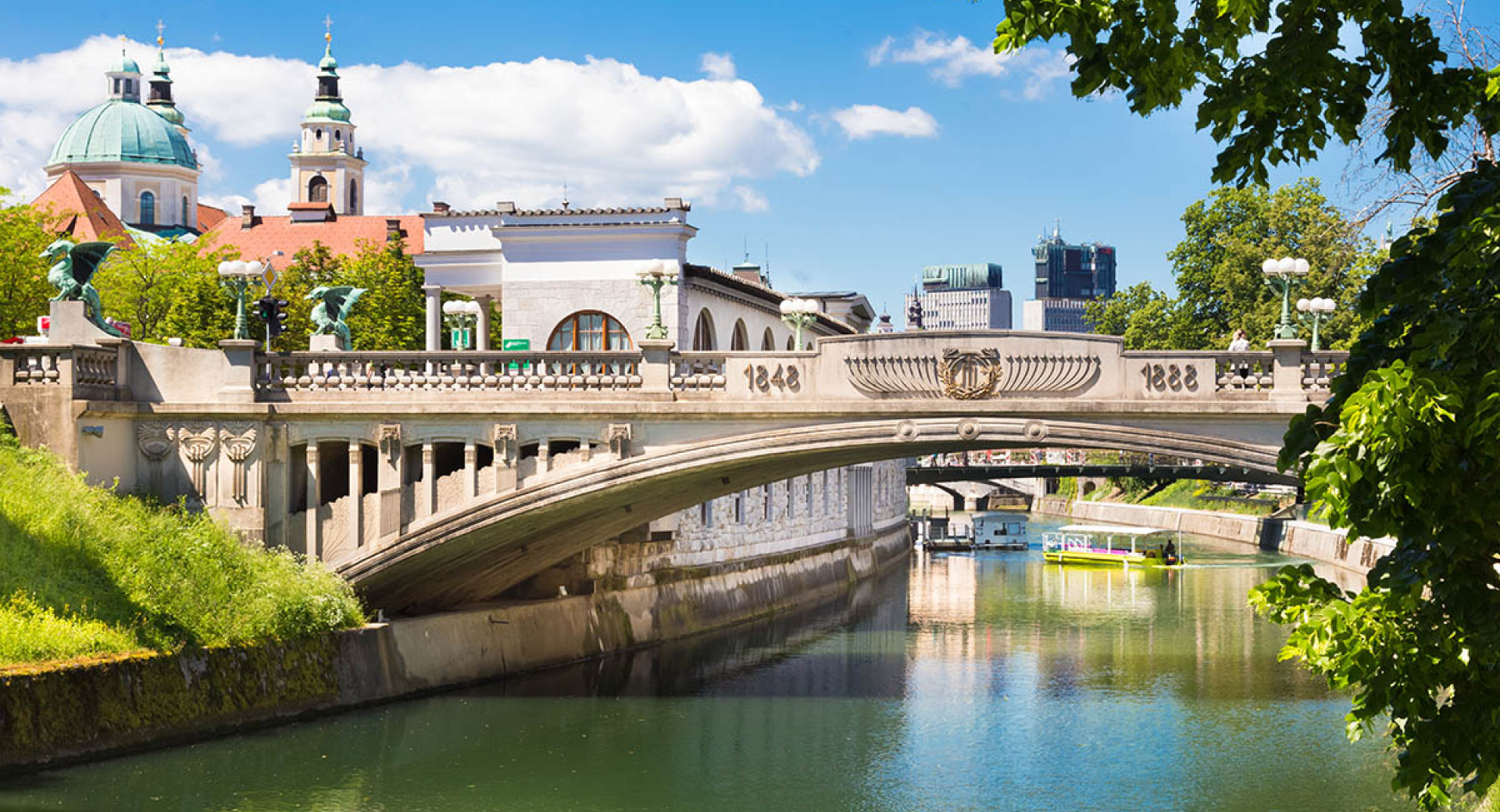
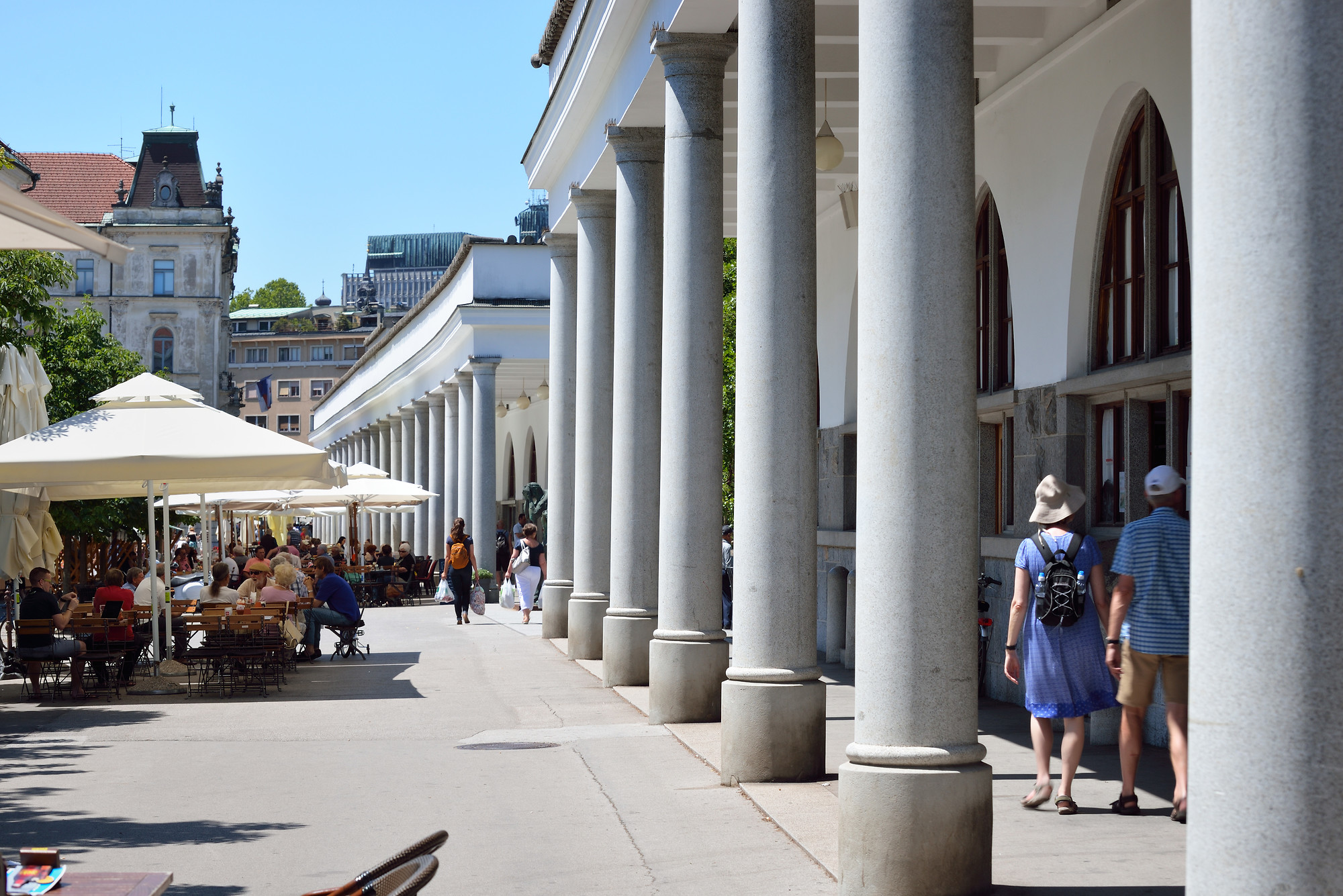
The riverside market building called also Plečnik's Market stretches between Three Bridges and the Dragon Bridge on the right bank of river Ljubljanica. The market is protected as a cultural monument of national importance. According to its original design and quality, it can be placed at the very top of world architecture. Plečnik's Market is also very important from a tourist point of view. Here, people can see Plečnik's architecture up close, enter it and feel its authenticity.

Ladies and gentlemen, we are approaching our starting point and the end of this lovely journey. We do hope you enjoyed your time on the boat Emonca and we wish you a fantastic day. If you really enjoyed it please rate us on one of our social medias, we would really appreciate it. Thank you for your visit and have a wonderful day:)


 0:00 / 0:00
Dear guests, welcome on our boat Emonca. We wish you a pleasant and relaxed trip on the river Ljubljanica.
First, our country should be introduced, we are located in Ljubljana, the capital city of Slovenia. Slovenia is a small country with a population of just over 2 million people, nestled between Austria, Hungary, Croatia and Italy. Because of the proximity of all the neighboring countries the Slovenian territory has been a home for an interesting mix of Slavic, Germanic and Romanic people and their traditions. Because of this and also because of our educational system, Slovenians speak three languages on average, which is one of the highest averages in Europe. In a relatively limited area, our country includes truly diverse landscapes complete with the Karst region, 42 kilometres of the Adriatic Sea coast and several high mountains. Slovenia is also one of the three most forested countries in Europe and additionally is proud to boast the oldest grape vine in the world.
And now a few words about the river Ljubljanica. The Ljubljanica is the continuation of several karst rivers. Due to the large amounts of limestone in the karst area, the river goes underground and resurfaces numerous times so it’s called the river of seven names. The river Ljubljanica is one of the most important archaeological sites in Slovenia. At the bottom of the riverbed, there are objects from different periods, from prehistoric times to the modern age. Because of its archaeological value, the river Ljubljanica has been protected as a cultural monument since 2003.

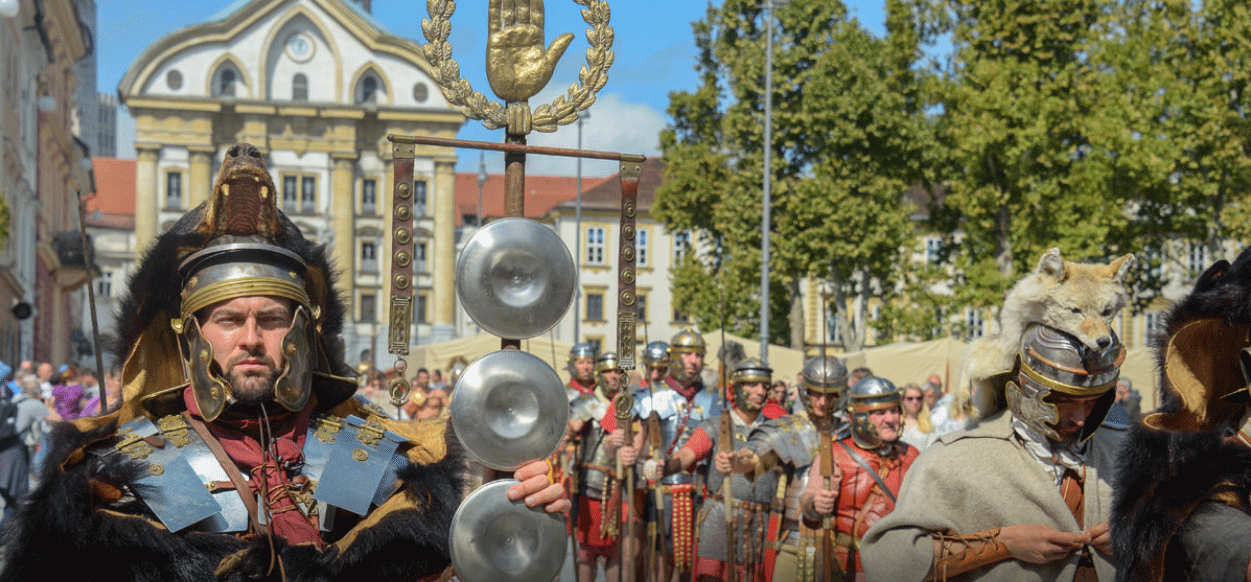
The first serious settlement in this area was in the 1st century under the Roman Empire, the city was called Emona. A big reason for the construction and continued existence of Emona was its role as one of the many stations on the Amber Road. This route is one of the oldest, which connected the North and Baltic Seas with the Mediterranean. It gets its name from the fact that in the Middle Ages, it was used to transport amber.

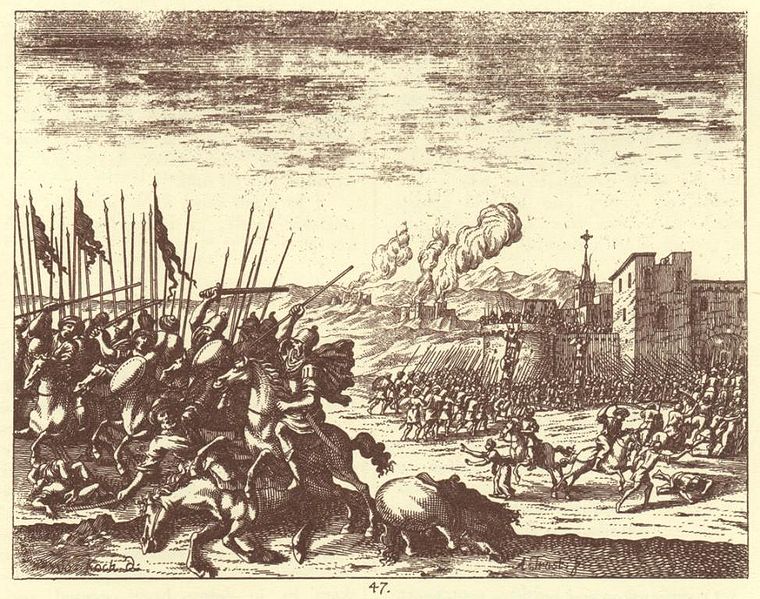
The times of the Middle Ages and the Holy Roman Empire followed. There were many Turkish invasions in the Middle Ages, later the Habsburgs ruled, except for the short rule of Napoleon in the early 19th century. People are mainly interested in our position in the former Yugoslavia. Yugoslavia was the collective name of several countries of the South Slavic nations, which united into one country under the leadership of President Tito after the Second World War. At that time, Slovenia had statistically the highest GDP and the largest export, which is quite interesting considering our size. A decade after Tito's death, Yugoslavia violently disintegrated. Slovenia was the first to gain independence after the 10-day war in 1991. Officially, 19 people died on the Slovenian side in the war. Later, our independence was followed by other countries of the former Yugoslavia, which brought many years of bloodshed.


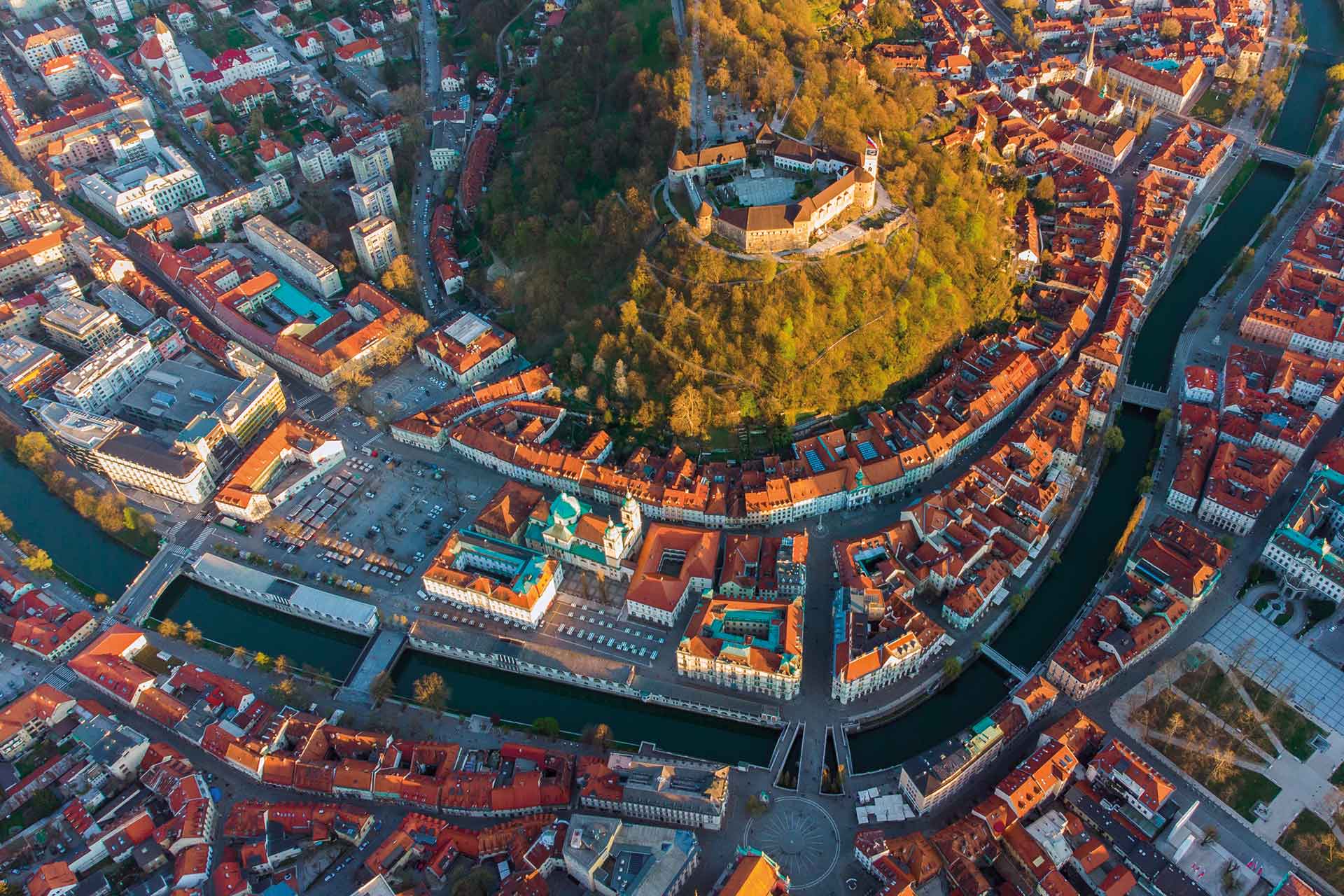
We are approaching an area of Ljubljana that in Slovenian is called Špica, the Point. There used to be a swimming area here and we keep hoping a new one will be reinstated. In front of us, we can see a colourful building, which is a biotechnical university and a ballet and music school. On our left side the river will separate with another channel, this is called Gruber's canal. It was handmade to regulate the water level, to prevent floods in the city. On the other side of the city, these two channels come back together so theoretically the part with the castle hill is the biggest island in Slovenia.
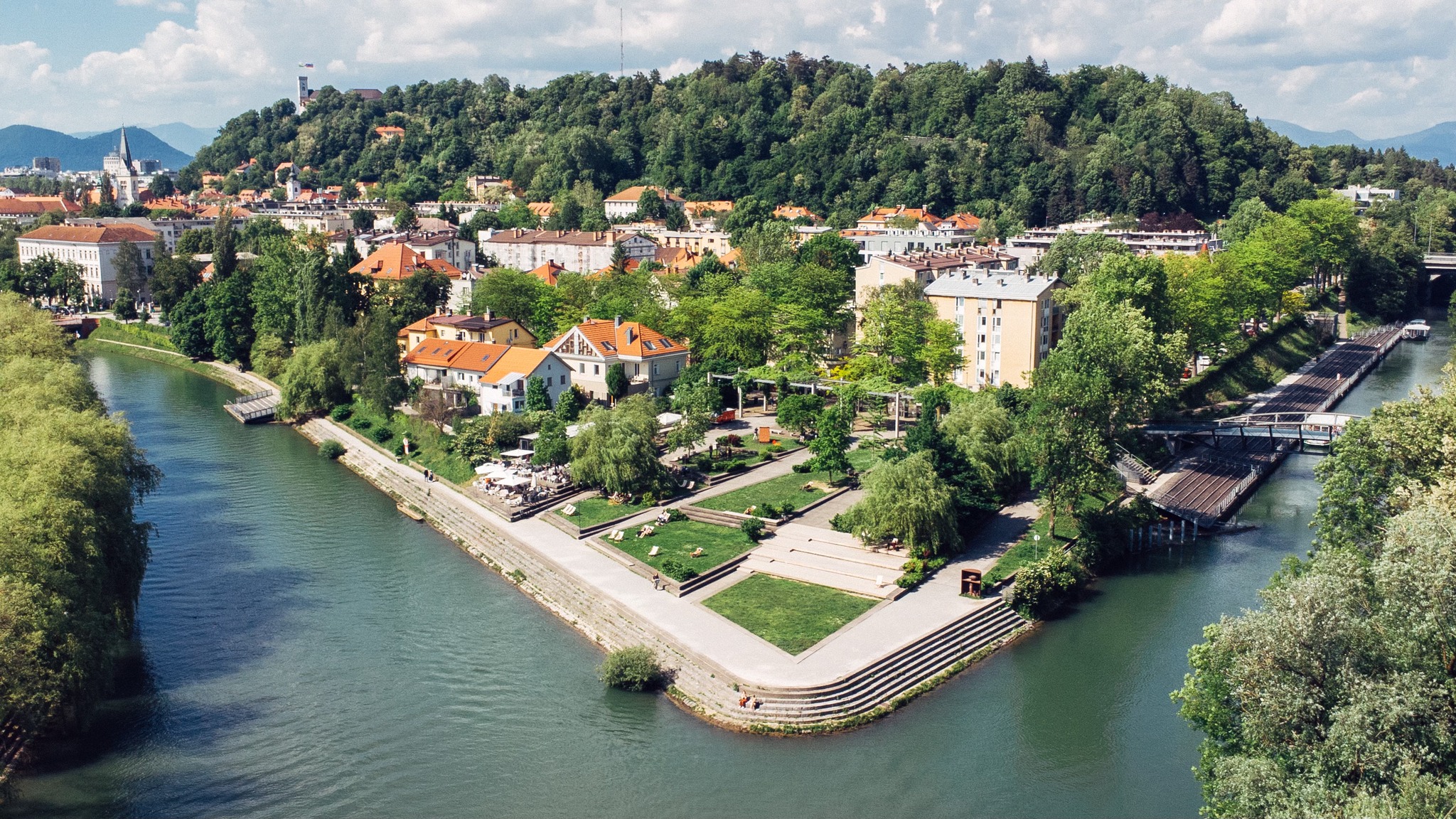
As we continue down the river pay attention to the kayaking and kanu club on the left side. This is the founding club of the kayak-kanu organization in the whole of ex-Yugoslavia.


The area that we are approaching now is the Ljubljana Marsh Regional Park called Ljubljansko Barje. The entire Ljubljana marshes covers approximately 1% of the surface area of Slovenia and it is home to a huge number of different animals and plants, even some endangered species. The most important and interesting element is, of course, the remains of the pile dwellers. These were the tribes that lived here, even before the Romans more than 2000 years ago. They lived in houses built on pillars and platforms above the water. They travelled in canoes and lived as hunters, gatherers and farmers.

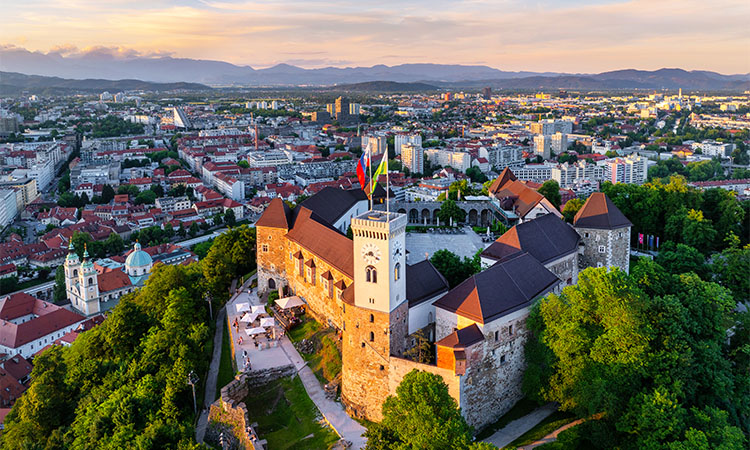
If you pay attention there will be a clear view of the castle hill and the wonderful castle on the top. The castle and its first form was built in the 11th century. Originally it was to be the residence and defensive outpost for the early lords of the region. Most of the buildings that we witness today, date back to the 16th century. Ljubljana Castle is quite interesting, because of the multitude of roles it has filled over time. It has been a military outpost house in the local army, it has been a medical hospital and at a time a huge jail. It began to decay and to crumble and become a shelter for the poorest families in Ljubljana who lived there in mud and misery. Today it host restaurants, cafes, museums and galleries as well as weddings and cultural events.
On the left side, we can see Trnovski pristan, also known as Trnovska plaža or Ljubljana beach, which was designed by the architect Jože Plečnik. With its stone steps that descend towards the river, it is a unique architectural creation and one of the most beautiful promenades in Ljubljana. In recent years, it has also been considered a very popular meeting place. At the end of the beach, we can see the river Gradaščica. Fishermen regularly gather here, as it is one of the locations where urban fishing is allowed. Sometimes fish over a meter long are caught.


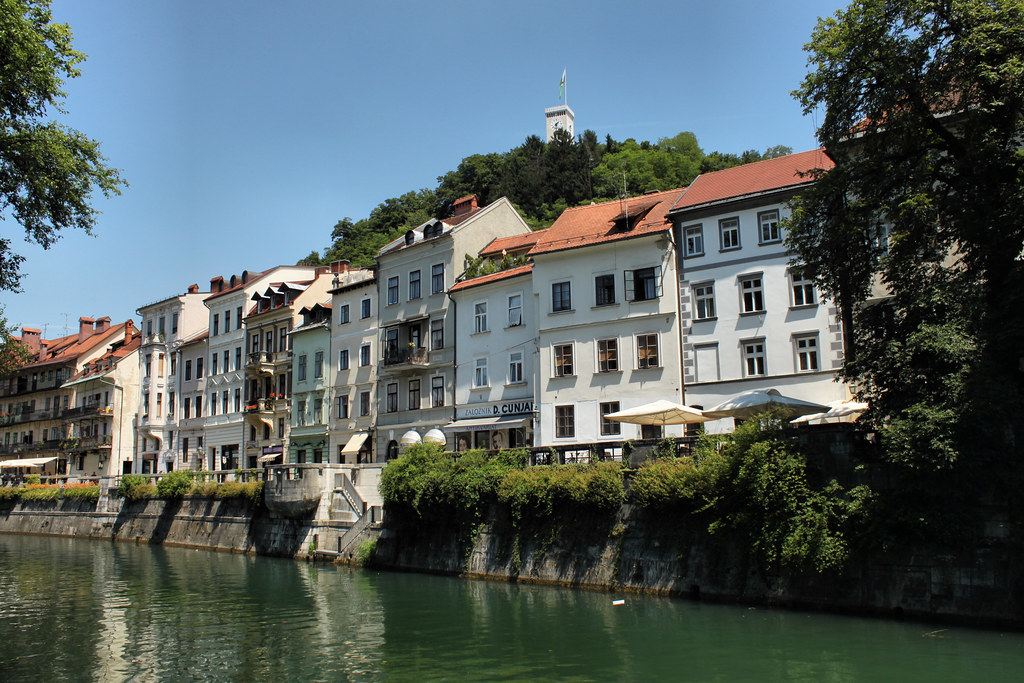
The entire right bank is occupied by the old part of Ljubljana. Some interesting architectural elements can be observed; like the narrow houses, statutory number of windows and long connected balconies. When these houses were built, Ljubljana was still behind the walls, which is why they wanted to fit as many separate houses as possible within the safety of the walls. They have similar elements because of the precise construction orders.
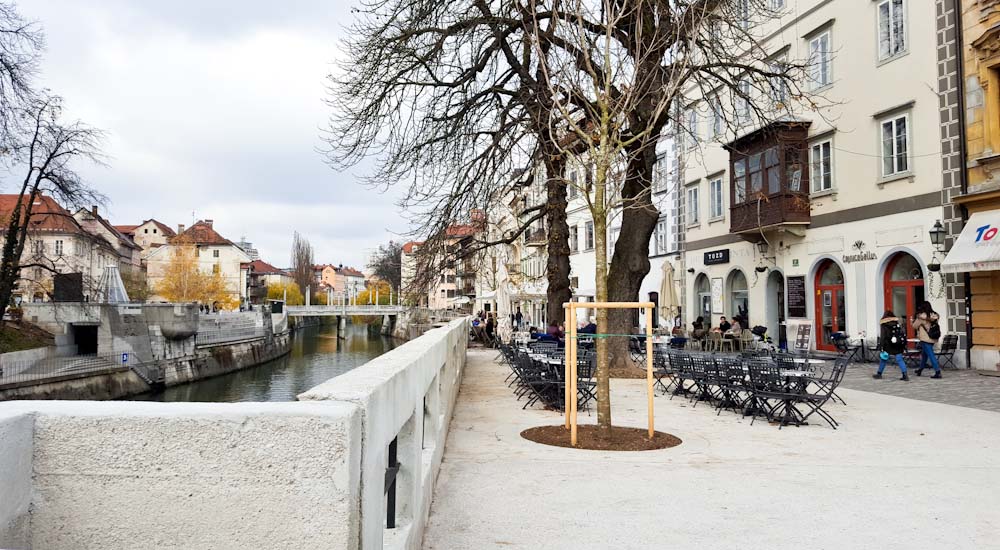
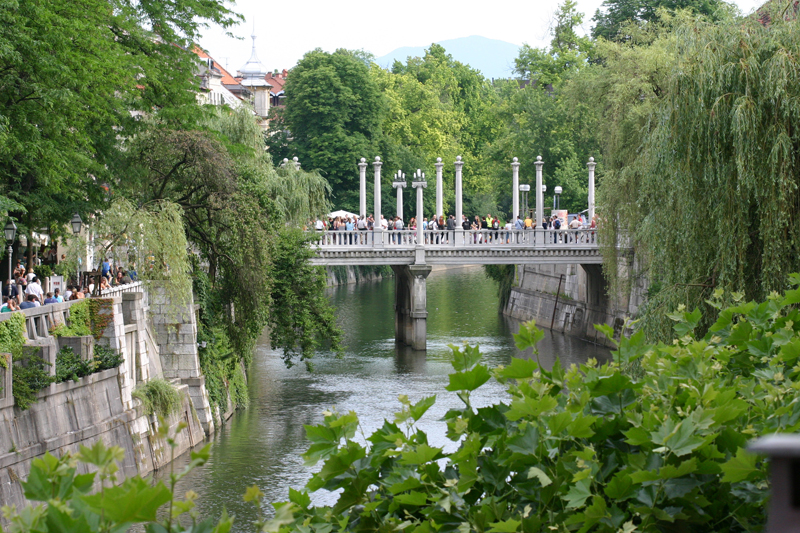
We are approaching the Shoemakers or the Cobblers Bridge, which, together with Three Bridges, is one of the oldest bridges in Ljubljana, dating back to the 13th century. The name of the Shoemakers Bridge has a funny story behind it. It started out as a wooden bridge with butchers booths on it, but the smell was so awful that the Emperor paid to have them removed to another place. The ones who took over the booths afterwards were shoemakers, giving the bridge its present name. The wooden bridge burned down in 1854. The new concrete one, founded by the architect Jože Plečnik, was completed in 1931.
Ladies and gentlemen, we are approaching our starting point and the end of this lovely journey. We do hope you enjoyed your time on the boat Emonca and we wish you a fantastic day. If you really enjoyed it please rate us on one of our social medias, we would really appreciate it. Thank you for your visit and have a wonderful day:)